
How a Song Finder Works?
A song finder works by analyzing the sound of a song and turning it into a unique digital fingerprint. This fingerprint is then compared with millions of stored song fingerprints in a database to find an exact match.
In simple words, a song finder doesn’t “listen” like humans do — it measures sound patterns and matches them using technology.
If you’ve ever heard a song on Instagram, YouTube Shorts, or a random video and wondered “what song is this?” — this is how a song finder works give you the answer in seconds.
so How a Song Finder Works? In detail.
A song finder app works by listening to a short audio sample and turning it into a unique audio fingerprint. This fingerprint is created by analyzing the high and low points of the sound waveform over a few seconds.
To visualize it simply, imagine the sound wave as a pattern of peaks and dips.
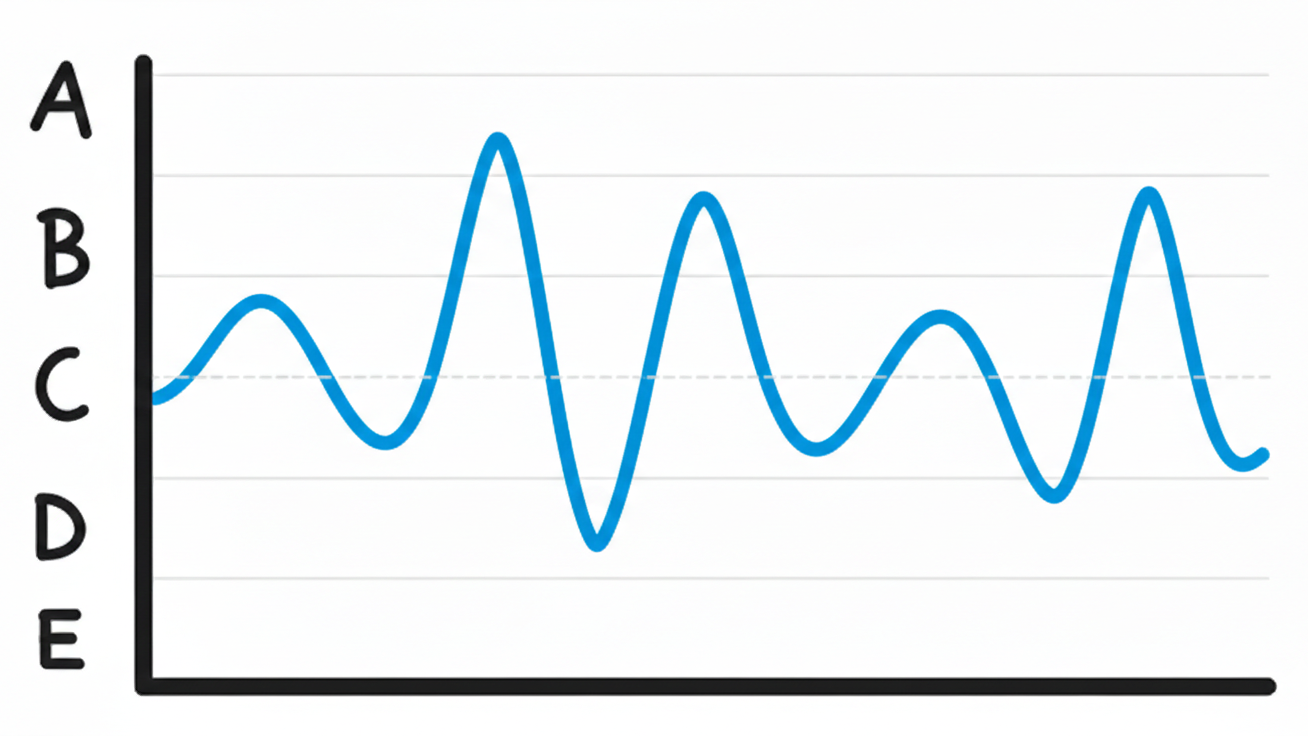
look at the above pattern, the system creates a fingerprint made of data points—something like CBDAEBDBDBC. This fingerprint represents the unique structure of that audio clip.
Once the fingerprint is created, it is sent to a server that contains a massive database of songs. Each song in the database already has its own fingerprints stored for the full length of the track. The system then searches the database for any song that contains a matching fingerprint sequence.
This process is extremely fast because it does not require heavy calculations. It works more like a search function, similar to pressing Ctrl + F on a webpage to find a word. The longer the audio sample provided, the longer and more detailed the fingerprint becomes, which increases matching accuracy.
This is the same core technology used by music software like iTunes for features such as identifying track names from audio files. The difference is that song finder websites often work with real-world audio—such as background music from videos or phone recordings—so they also use additional algorithms to filter out noise and isolate the song.
This is how a song finder can identify music accurately in just a few seconds.
What Is an Audio Fingerprint?
Every song has a unique sound structure, just like every human has a unique fingerprint.
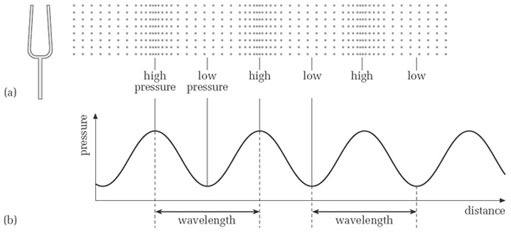
When a song plays, it creates a sound wave made of:
- Peaks (loud sounds)
- Dips (soft sounds)
4
A song finder analyzes these peaks and dips and converts them into a short digital code. This code might look something like:
CBDAEBDBDBC
This code is the audio fingerprint of that short sound clip. Even a 10–30 second sample is enough to create a reliable fingerprint.
Step-by-Step: How a Song Finder Website Identifies Music
1. The Audio Is Collected
The song finder takes audio from:
- A video link
- A reel or short
- An uploaded clip
- Background music from a video
It does not need the full song. A short sample is enough.
2. The Fingerprint Is Created
The system analyzes:
- High and low sound frequencies
- Timing between sounds
- Repeating patterns
From this, it creates a fingerprint representing the structure of the audio.
3. The Fingerprint Is Sent to the Server
The fingerprint is sent to a server that contains a massive database of songs. Each song in the database already has fingerprints stored for its full length.
4. The Database Is Searched
The system searches the database for any song that contains a matching fingerprint sequence.
This search is extremely fast because it does not require heavy calculations. It works more like a search function, similar to pressing Ctrl + F on a webpage to find a specific word.
The longer the audio sample, the longer the fingerprint — and the more accurate the match.
Why Song Finders Work So Fast
Many people think song identification uses complex processing every time, but that’s not the case.
Most of the work is already done in advance:
- Song fingerprints are pre-stored
- Matching is quick
- Only small data patterns are compared
That’s why song finders can identify music in just a few seconds.
How Song Finders Handle Noisy or Short Clips
In real life, audio isn’t perfect. Songs may:
- Play in the background
- Be mixed with voices
- Come from phone recordings
- Be part of short videos
To handle this, modern song finder websites use additional algorithms to:
- Reduce background noise
- Focus on stable sound patterns
- Ignore irrelevant audio
This is more complex than working with clean audio files, but it allows accurate identification even in difficult conditions.
Is This the Same Technology Used by Music Apps?
Yes.
This is the same core technology used by music software like iTunes and other music identification systems. The main difference is that those systems often work with clean audio files, while song finder websites usually work with real-world audio from videos and links.
Why Some Song Finder Websites Fail
Not all song finder tools work well.
Common reasons include:
- Small song databases
- Weak fingerprint algorithms
- Poor audio extraction
- Slow servers
If the database is limited or the fingerprint is inaccurate, the song may not be identified.
How Starrayto Song Finder Works Better
Starrayto Song Finder is designed for modern use cases like:
- Instagram Reels
- YouTube Shorts
- Social media links
- Short audio clips
Instead of guessing, it:
- Extracts clean audio from links
- Creates precise audio fingerprints
- Matches them against a large song database
- Delivers results quickly
You don’t need to install an app or upload full songs.
Just paste a link and let the system do the work.
Is Using a Song Finder Legal?
Yes.
Song finder websites are legal because:
- They do not store or distribute full songs
- They analyze short audio samples
- They only identify music, not provide downloads
They work similarly to search engines — but for sound.
How Accurate Are Song Finders?
Accuracy depends on:
- Database size
- Audio clarity
- Fingerprint quality
With a strong system, song finders can identify music accurately even from short or noisy clips.
Final Thoughts: How Does a Song Finder Work?
A song finder works by:
- Listening to a short audio sample
- Turning sound into a digital fingerprint
- Matching that fingerprint with stored song data
It’s fast, smart, and powered by audio pattern recognition.
If you often hear songs in videos and wonder “what song is this?”, a tool like Starrayto Song Finder makes the process quick and effortless.
Try Starrayto Song Finder. Let the system analyze the sound. Get the song.
